
- Visa exemptions: UK, US, Canadian, and most EU citizens enter visa-free for up to 90 days (under Decree 7976). Australian citizens require an online e-Visa (~$50).
- Transit priority: Buy an Istanbulkart on arrival (~165 TL card, ~42 TL per ride). Take trams and commuter ferries everywhere; taxis are where travelers lose money.
- Hagia Sophia fee: Foreign tourists pay €25 to access the upper mosaic gallery (closed to visitors Friday midday prayer).
- Realistic budget: $100–150 per day covers quality boutique hotels in Sultanahmet or Galata and superb traditional dining.
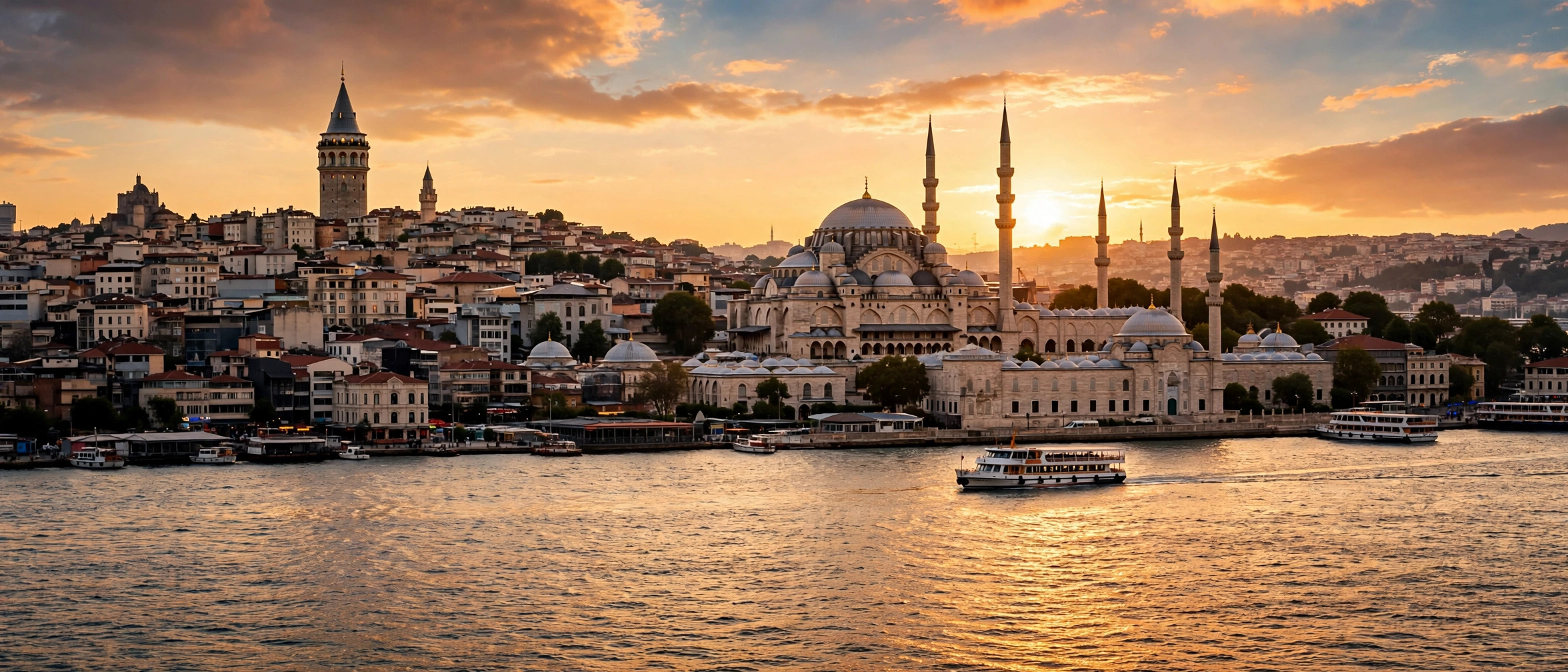
Istanbul is the only city in the world built across two continents, and it acts like it. Fifteen centuries of empires stacked on top of each other, mosques that were churches that were mosques again, a bazaar older than most countries, and ferries that cross from Europe to Asia for the price of a bus ticket.
It's also loud, hilly, and occasionally trying to sell you something. Both things are true at once.
This guide covers the practical side: visas, timing, neighborhoods, costs, transport, the scams everyone warns about, and what to actually eat. Three to five days covers the essentials; a week lets you slow down.
Visa and entry
Getting in is straightforward for most visitors.
- UK, US, Canadian, and most EU citizens: visa-free, up to 90 days in any 180-day period. (The US/Canada exemption came from a December 2023 presidential decree.)
- Australian citizens: get an e-Visa online before travel (around $50). Walk-up visas at the airport no longer exist.
- Other nationalities: rules vary; check the official e-Visa portal for your passport.
Your passport should be valid for at least 60 days beyond your visa or visa-free stay (practically: six months validity avoids arguments at check-in).
Istanbul has two airports. IST (the big new one, European side) handles most international flights; SAW (Sabiha Gökçen, Asian side) handles budget carriers. The Havaist bus from IST to the center costs around $5 and takes 45–90 minutes depending on traffic. A taxi runs $25–40. Agree on the meter or a price before the doors close.
When to go
Weather here is genuinely seasonal, which surprises people who lump all of Turkey together.
April–May: The best window. Expect mild days around 18–24°C with flowers everywhere. The crowds are manageable too. This is when I'd go.
June–August: Hot (28–35°C), humid, and packed, especially July, when domestic tourists pile in. Prices peak. Summer is still worth it if that's when you can go. Just book ahead.
September–October: The second-best window. The sea is still warm, the crowds have thinned, and the light is good. October can turn rainy without much warning.
November–March: Cold and grey with occasional snow, but much cheaper. Hotels drop prices significantly. Istanbul in winter has a moody charm if you don't mind bundling up, and the sights are nearly empty.
You basically choose between better weather and more people, or cheaper hotels and a coat. Istanbul doesn't offer much of a third option.
Where to stay

Pick your neighborhood first, your hotel second. They shape the trip more than the room does.
Sultanahmet (Old City): Where the sights are: Hagia Sophia, Blue Mosque, Topkapi, the cisterns. Walkable to everything historic. It quiets down at night and it's less tourist-trappy than its reputation suggests, with plenty of good restaurants within walking distance. Best for a short visit of 3–4 days.
Galata / Beyoğlu: Across the Golden Horn: trendier, livelier at night, better food scene. If you want the "cool neighborhood" base, that's the Galata Tower area. More climbing (the hills are steeper than they look on a map).
Kadıköy (Asian side): Where Istanbulites actually eat and hang out. Cheaper, more local, great food markets. The ferry commute to the European side is 20 minutes and genuinely pleasant. Best for a second visit or a longer stay.
Taksim: Central and well-connected but loud, and the surrounding streets are where most of the scam stories start. Fine for nightlife, less fine for sleeping.
I'd stay in Sultanahmet for the first few days and take the tram or ferry everywhere else. If you can spare five days, split it: three nights old city, two nights Galata or Kadıköy.
What to see and do
You can't see all of Istanbul. Here's the shortlist that earns its reputation, plus the honest caveats.
Hagia Sophia. The building that justifies the trip: 1,500 years old, church turned mosque turned museum turned mosque again. Since 2023, foreign visitors pay €25 for the upper gallery with the Byzantine mosaics. Closed to tourists Fridays 12:00–14:30. Don't rush it. Give yourself at least two hours.
The Blue Mosque. Directly across the square, and free. It's closed to visitors during the five daily prayers (about 30–45 minutes each), so time your visit between them. It's arguably better admired from outside than in; the interior has been under renovation on and off for years. Decide for yourself, but don't skip the courtyard.
Basilica Cistern. A few minutes' walk from Hagia Sophia: an underground Roman water reservoir with 336 columns and Medusa heads as column bases. Dark, dripping, atmospheric. Around $15. Pair it with Hagia Sophia on the same morning.
Topkapi Palace. The Ottoman sultans' residence for 400 years. Huge, sprawling, easy to spend half a day. Go on a weekday morning if you can; weekends are packed. Don't skip the kitchens; they're unexpectedly the most interesting part.
Süleymaniye Mosque. On a hill above the Golden Horn: grander in scale than the Blue Mosque, fewer tourists, and the terrace has one of the best Bosphorus views in the city. Free. If mosque fatigue sets in, this is the one to keep.
The Grand Bazaar. One of the oldest covered markets in the world: 61 streets, thousands of shops. Skip the overpriced main hall and buy on the fringes outside it. The first price is theater. Don't haggle unless you want the item. Go in for a look and you may come home with a rug you have absolutely nowhere to put.
The Spice Bazaar (Egyptian Bazaar). Smaller, more fragrant, more food-focused than the Grand Bazaar. Good for Turkish delight, spices, and tea. Prices are marked more often here, which makes it less stressful.
A Bosphorus ferry. Not a tour: a regular commuter ferry. The ride from Eminönü to Kadıköy or up the Bosphorus costs a few lira on your Istanbulkart and gives you the skyline, the palaces, and the two continents for the price of public transport. The tourist cruises ($25–60) sell the same water with a loudspeaker.
A hamam (Turkish bath). The full self-service scrub is an experience: hot marble, a stranger exfoliating you with a rough mitt, tea afterward. Historic options include Çemberlitaş and the Süleymaniye hamam (which accommodates couples). Budget $30–80 depending on the package.
Balat and Fener. The old Greek and Jewish quarters along the Golden Horn: colorful houses, steep lanes, churches and synagogues, almost no crowds. Good for a half-day wander when the main sights are packed.
Istiklal Street and Galata Tower. The pedestrian shopping street through Beyoğlu, ending at the medieval Galata Tower. Touristy, yes, but the side streets off Istiklal have some of the city's best bars and meyhanes (taverns).
A 4-day itinerary
For a first trip, I'd do this:
Day 1: The old city core. Hagia Sophia (morning, before the groups), Blue Mosque between prayers, Basilica Cistern, then the Hippodrome square and lunch in Sultanahmet. Evening: walk down to the Galata Bridge for a mackerel sandwich from the boats underneath (skip the mussel vendors).
Day 2: Palaces and bazaars. Topkapi Palace in the morning (weekday if possible), the Archaeology Museum next door if you like that sort of thing, then the Grand Bazaar in the afternoon when you need shade. Haggle or don't buy.
Day 3: The Bosphorus. Süleymaniye Mosque in the morning for the view, then the Spice Bazaar and Eminönü. Afternoon: commuter ferry up the Bosphorus or across to Kadıköy for dinner on the Asian side. You won't find a cheaper great experience than the ferry at sunset.
Day 4: Neighborhoods. Balat and Fener in the morning, Galata Tower and Istiklal Street in the afternoon, a hamam to finish. Or swap in the Princes' Islands (ferry from Kabataş, ~137 TL) if you want water and quiet.
Less than four days? Cut Day 4. More than five? Add a day trip, or just slow down. Istanbul rewards wandering more than most cities.
Budget: what it actually costs

The lira's weakness is your friend. Istanbul is one of the best-value major cities in the region for anyone earning in dollars or euros, with one catch: sights priced in euros (Hagia Sophia, the Museum Pass) don't get the discount.
A realistic mid-range budget is around $100–150 per person per day. A decent hotel in Sultanahmet or Galata runs $80–150 a night. (BudgetYourTrip's independent cost tracking puts the average mid-range day at about $154.) A rough breakdown:
| | Budget | Mid-range | |---|---|---| | Accommodation | $15–35 (hostel) | $80–150 (hotel) | | Food | $12–20 (street food, lokantas) | $35–60 (restaurants) | | Transport | $2–4 (Istanbulkart) | $5–15 (transit + occasional taxi) | | Sights | $0–15 (free mosques) | $20–40 (paid entries) | | Daily total | $55–70 | $100–150 |
Money specifics worth knowing:
- Street food (simit, kebab, lahmacun): $2–5.
- Esnaf lokantası (tradesmen's restaurants, the lunch counters where workers eat): $5–10 for a full meal. This is the best value in the city.
- Mid-range restaurant: $15–30 per person.
- Turkish breakfast spread: $8–15, and it's a feast.
- Turkish tea: $1–3. You'll drink a lot of it.
- Topkapi Palace: ~$20. Basilica Cistern: ~$15. Hagia Sophia: €25.
- Istanbul Museum Pass: ~€105 for 5 days, but check the fine print. It does not include Hagia Sophia or the Basilica Cistern — the two sights most visitors want — which catches a lot of people off guard. Do the math before buying.
- Hamam: $30–80.
- Tipping: 10% at restaurants is customary. Round up taxi fares.
Cards are widely accepted, but carry cash for street food, markets, small shops, and transport top-ups. ATMs are everywhere.
Getting around
The Istanbulkart is the single most important thing you'll buy. The reloadable transit card for metro, tram, buses, and ferries: ~165 TL for the card, ~42 TL per ride. Get it at airport or metro machines on arrival. The T1 tram covers the old city; the metro covers the newer districts.
Ferries are part of the same system. The commuter boats across the Bosphorus and the Golden Horn cost the same as a tram ride and double as sightseeing. Use them.
Taxis are where newcomers get burned. It's the top complaint from visitors, and the pattern is almost always the same: the meter is "broken," a fixed price is quoted upfront, you get the scenic route, or the short-change trick at payment. See TripAdvisor's Istanbul forum for the full repertoire. Defenses that actually work:
- Use BiTaksi or Uber so the route and fare are recorded.
- If hailing on the street, confirm the meter is running before the car moves.
- Keep small bills separate and pay with correct change when you can.
- Pre-book airport transfers instead of negotiating at arrivals.
Honestly? Between the tram, metro, and ferries, you can do a whole trip barely touching a taxi.
Food: what to eat
Istanbul's food is one of the main reasons to come. The essentials:
- Turkish breakfast (kahvaltı): a spread of cheeses, olives, eggs, honey, kaymak (clotted cream), bread, and endless tea. Order it once at a proper breakfast place. It's a meal and a half.
- Kebabs: not just döner. Try Adana (spicy minced), Urfa (mild), and İskender (sliced döner over pide with tomato sauce and yogurt).
- Lahmacun: thin flatbread with minced meat; the $2–3 street version is excellent.
- Simit: the sesame bread ring sold from carts everywhere. Breakfast on the go.
- Balık ekmek: the mackerel sandwich from the boats under Galata Bridge. A classic.
- Baklava and künefe: pistachio baklava from a proper shop (Karaköy Güllüoğlu is the famous name), künefe hot from the pan.
- Turkish coffee: thick, strong, ordered by sweetness level. Those grounds at the bottom aren't a mistake; that's how Turkish coffee works.
Eat where the workers eat. The esnaf lokantası (steam trays, no menu in English, lunch rush) is where the good cheap food lives. Tourist-trap restaurants near the sights charge double for half the quality; walk two streets over.
One small thing I'd recommend: learn five words of Turkish before you arrive. Not because people are rude to non-speakers (they're famously patient), but because the moment you say teşekkürler (thank you) and mean it, something shifts. It costs nothing.
Scams and safety

Most visitors don't run into serious trouble in Istanbul. The annoying stuff is usually financial: scams, inflated taxi fares, and the occasional aggressive seller, concentrated around Taksim, the Grand Bazaar, and the busiest tourist areas.
The classics, all still running:
- The shoe-shine drop. A shoe shiner "accidentally" drops his brush in front of you. You pick it up. He insists on shining your shoes out of gratitude, then demands payment. Keep walking.
- The friendly stranger. Someone strikes up conversation, mentions his cousin's carpet shop / leather shop / restaurant, and steers you there. The shop gives him a cut. A genuine chat doesn't come with a destination.
- The drink in your hand. A shopkeeper presses a glass of tea or raki into your hand while you browse. It's not free — it appears on the bill. Accept tea in a carpet shop if you want; just know the game.
- The taxi repertoire. Covered above. Meter, app, or walk away.
- The Grand Bazaar box-in. One shopkeeper runs the sales patter while his partner blocks your exit path. You don't have to stay. Walk out.
General rules: don't follow anyone anywhere, don't start a transaction you don't want to finish, and keep your phone and wallet buttoned up in crowds like anywhere else. Solo female travelers visit in large numbers; the usual big-city awareness applies, especially after dark around Taksim.
One more thing: avoid political demonstrations entirely, and don't photograph them. That's standard advice for Turkey, not specific to tourists.
Culture and etiquette
A few habits make everyday interactions easier:
- Mosques: cover shoulders and knees, remove shoes, women cover their hair (scarves are provided free at major mosques). Don't visit during prayer times, don't photograph people praying, and keep your voice down. Friday midday prayers are the longest, so plan around them.
- Ramadan: if you visit during Ramadan, many restaurants are closed during the day in conservative areas but open in tourist zones. Stick around for the evening iftar if you can; the atmosphere is worth it.
- Bargaining: expected in bazaars and markets, not in restaurants or shops with price tags. Start at half the asking price and meet in the middle. Smile while you do it.
- Tea: you'll be offered tea constantly: in shops, at the hamam, by your hotel. Accepting is polite; it's also a sales tactic. Both can be true.
- Tipping: 10% in restaurants, small change for porters and café staff.
What to pack
- Walking shoes with grip. Those hills and cobblestones are no joke.
- Layers; the weather changes fast, especially in spring and autumn.
- A scarf for mosque visits (provided free, but your own is easier).
- Clothing that covers knees and shoulders for religious sites.
- Sunscreen and a hat for summer; a rain jacket for October–April.
Frequently asked questions
How many days do I need in Istanbul?
Three days covers the essentials (old city sights, one bazaar, a Bosphorus ferry). Four to five days is the sweet spot. It adds neighborhoods like Balat and Kadıköy plus a hamam. A week lets you add a day trip or just wander.
Is Istanbul in Europe or Asia?
Both. The Bosphorus splits the city; about two-thirds of the population lives on the European side. Ferries cross between continents constantly.
Is Hagia Sophia still a mosque?
Yes. It's an active mosque since 2020, which is why tourists are restricted to the upper gallery (€25) and barred during prayer times, including Friday afternoons.
Can I drink alcohol in Istanbul?
Yes. It's a secular city with bars, meyhanes, and rooftop spots everywhere, especially in Beyoğlu and Kadıköy. It's more expensive than you'd expect; taxes are high.
Is the tap water safe?
Locals don't generally drink it. Bottled water is cheap and everywhere.
Do I need cash?
Some. Cards work in hotels, restaurants, and shops, but carry lira for street food, markets, small vendors, and Istanbulkart top-ups.
What's the one mistake newcomers make?
Trying to see it all on foot without the Istanbulkart, then overpaying for taxis between sights the tram would have reached in ten minutes.
The bottom line
Istanbul is a city that rewards a simple strategy: base yourself near the sights, ride the ferries like a local, eat where the workers eat, and treat every taxi ride as a negotiation you've already decided to avoid. Four days, $100–150 a day, an Istanbulkart in your pocket, and comfortable shoes.
You probably won't see everything. Nobody does — the city is still going on without you either way. But you'll eat well, you'll cross between two continents before lunch, and you'll understand why people keep coming back. That's enough for a first trip.